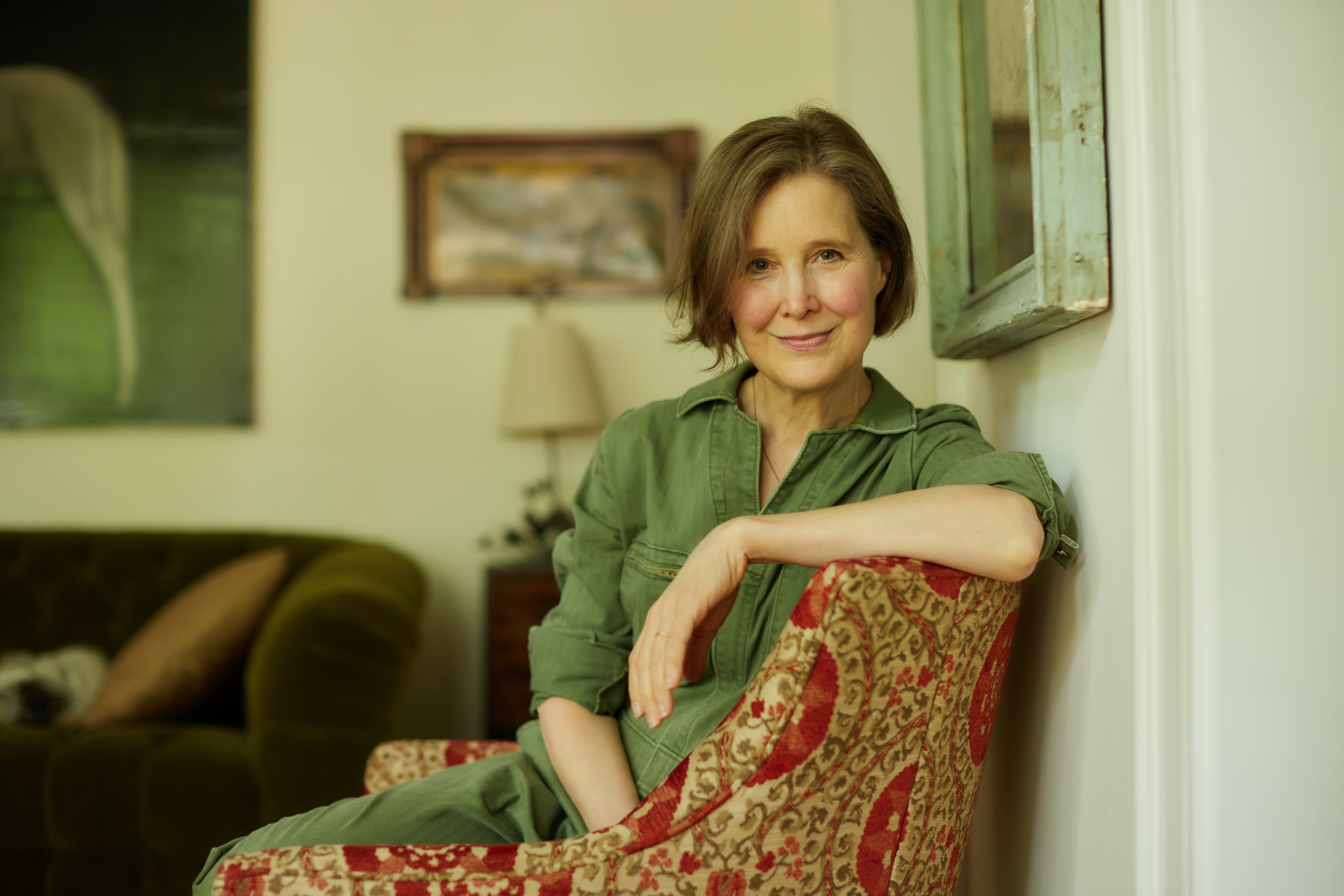
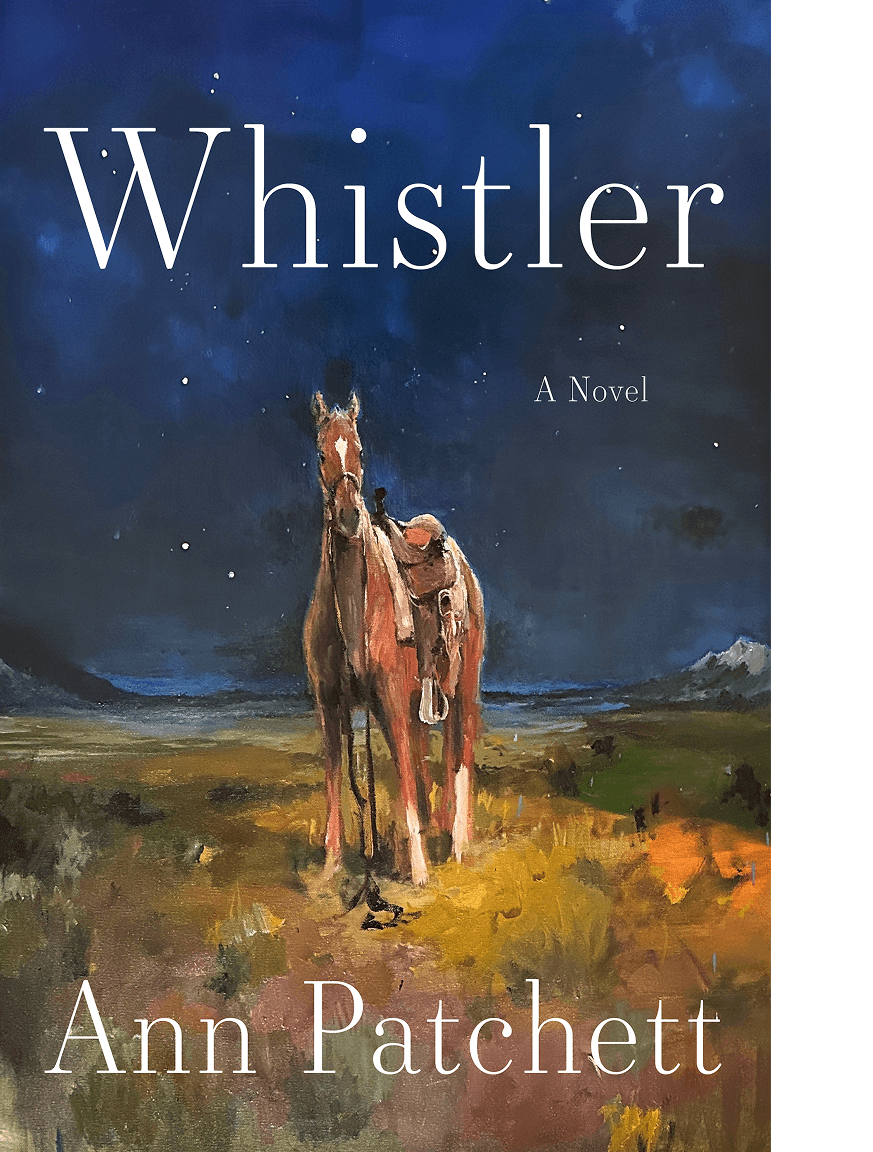
Ann Patchett’s Whistler has been hard to miss. The prolific author’s latest novel debuted as a number one bestseller on The New York Times fiction list, and 14 weeks later, is still on the list. The book follows the main character, Daphne, as she reconnects with Eddie, the stepfather she loved dearly, more than 40 years after he disappeared from her life.
Now in her 50s, Daphne’s old enough, Patchett says, not to have to "check in with anybody" and to decide for herself how he fits into her life. Her choice shapes the heart of the story (no spoilers), and mirrors a worldview that Patchett has leaned into lately too. As she puts it, you “come into your power” as you get older, which makes seeking approval much less appealing. Sign us up.
Below, Patchett shares the lesson she learned from Barbara Kingsolver, plus the childhood story she spent decades getting wrong (it involves a nun), and why, sometimes, a year’s worth of work really does belong in the trash.
You've written about familial relationships before. With “Whistler,” what made you want to explore the particular dynamic between a stepparent and child?
I didn't start with the idea of the stepchild and a stepfather. I wanted to write about a certain kind of friendship and incredible closeness — and [an] almost romantic relationship that is in no way romantic in the ways that we think about that word. I'm very interested in the idea that if a child knows one person who really pays attention to her and sees her — even for a short period of time — that can set you on a track for a wonderful life.
So then I was thinking: “This person had a very close relationship with someone when she was a child and then all this time goes by and they meet again and they still love each other like crazy. What is that relationship going to be?” It could be a neighbor, it could be a teacher, it could be a relative. Then, working through the list, I got to a stepparent because if a stepparent gets exiled, the child has absolutely no ability to find out what happened to that person — to get the story.
Not to spoil anything, but those two characters meet again at very specific points in their lives: He's in his 70s, she's in her 50s. Why those ages?
Because she doesn't have to check in with anybody. If she was in her 20s, maybe even in her 30s, she would feel compelled to go to her mom, or make sure that her husband was OK with this.
I think there is more insecurity among younger women, and then you get to a certain age — let's just say, after menopause — where you're like, “No, I don't have to check in with anybody about this.” And even though she's not doing anything wrong, it's very important to her to not check in. It's not about anyone else. That's a very important point.
That’s a great commentary on aging. It gets such a bad rap — but not having that pressure as you get older is a major plus.
I remember when I was in my probably middle or late 40s, I was visiting Barbara Kingsolver [Editor’s note: she’s the author of Demon Copperhead]. She said, "Oh, just wait until you're 50. Everything's going to change." And it really did. You will really not be as interested in making sure that everybody else is OK all the time. You kind of come into your power. I'm 62 and it's only growing. That desire to please or conform abates.
I have stopped being a small neurotic animal who is going around saying, "What can I get for you? What can I do for you? How can I anticipate your needs before you actually have a need and solve the need before you experience the need?" I'm letting go of some of that, which I think makes me a less irritating person.
As a millennial who analyzes everything to death, it was refreshing to see Daphne and Eddie enter this new phase of their relationship without resentment or anger. Why was that important to you? How does that tie into the book's theme on aging and loss?
It does trip Daphne into looking at her mother again as an adult, which is something in the book that I love. It's not even that she forgives her mother, but that she comes to understand she doesn't have anything to forgive her mother for.
Her mother was in a bad spot twice. And Daphne has really behaved like a petulant child — she got frozen in that angry-child moment of her life. The fact that Eddie returns and these stories are revealed to her, she can suddenly see her mother as an adult would.
“Whistler” hinges on the stories people tell themselves about their own lives. How do those stories shape the way we understand ourselves and those closest to us?
My husband and I have been together for 32 years and we've heard each other's stories so many times — the stories of childhood, the kind of iconic stories. Over time, you can watch somebody shape their life into a story. And the story has less and less relationship to the truth of what happened. You don't even remember what happened. You only remember the story.
The stories become these totems that people carry around. They say, “This is who I am.” It's like when you meet someone and they say, “I'm shy” or “I'm a people person.” We tell ourselves [these stories] to define ourselves. So when they start getting knocked apart, there's a real openness and vulnerability.
What interested you about the way our understanding of our childhoods can change as we age? How does it make forgiveness possible?
I went to Catholic school and there was a nun who was my reading teacher from first through third grade. [Her name was] Sister Nena. I told this story about this awful nun who kept me in from recess for three years because I wasn't reading. I told that story my whole life: She would chase me down. I would hide in the coat room under coats and she would find me.
Then, when I was 39, she found me again and we went out and I realized that I had made a judgment about a woman when I was 6 years old. I decided that she was mean because she thought I should read. It actually would have been a problem to go through my whole life without being able to read.
So many of us do that. We do it to our parents. We do it to all sorts of people that we love. “Oh, you didn't come through for me at that basketball game one time.” Then one day you wake up and you think, “it's really hard to be a parent. It's really hard to pull all of this off and maybe I should stop blaming and be a little more grateful.”
You’ve talked about putting another novel aside to write “Whistler.” How do you know when it's time to pivot?
I think that a lot of people don't read a fraction of the bad books that I read. So when I'm working on something and it's bad, I know it. It's a little bit like being in a bad relationship and knowing it. You know you should get out of it, but you don't because you keep telling yourself, “Well, maybe if you do this or that it would be better and you've already put all that time into it.” You know that story. Then you get out and you're like, “Thank God."
I didn't put that novel away — I put it in the trash. I never want to see it again. It just wasn't working. Then I had this idea and I thought, “Oh, yeah, that that makes perfect sense.”
Liz Gilbert [Editor’s Note: that’s the author of Eat Pray Love] said to me, "Runway is runway." So if you had spent a year working on something that wasn't working and then you went to an entirely different story, you're still working things through. All of that time isn't wasted. It can go right into the new book.
If you could talk books with any author, living or dead, who would you choose? And then, which book of theirs should we read?
One is not an author, but [my friend] Jim Fox [whom Whistler is dedicated to] was my reading soulmate. If he loved a book, I loved it. If I hated a book, he hated it. The first book he ever told me to read was Portrait of a Lady by Henry James. So that's a very symbolic book.
There's so many authors I talk about books with, but I'm going to say Kate DiCamillo [Editor’s Note: She’s the author of Because of Winn-Dixie]. Kate and I talk every Sunday morning on the phone, always about books — and she is always reading me chunks of a book.
I am reading Joan Didion’s Slouching Towards Bethlehem right now, which is an unparalleled treat because it's not a galley and it's not anything I'm doing. I just wanted to go back and read it again.
Oh, and my friend Meg Mason’s book is coming out [at the end] of September. It's called Sophie, Standing There. It hits this perfect sweet spot of being funny, readable, entertaining, and so profound and so unlike anything else I've ever read.
What's one book you think is a must-read for fall?
Yiyun Li’s Music Against the Night. It may well be the best contemporary novel I've ever read. It's incredible. She won the Pulitzer for her nonfiction book Things in Nature Merely Grow. Her last fiction, Wednesday's Child, was a collection of short stories, which was a finalist for the Pulitzer. She's won everything. She's just one of our greatest writers, and I think this is her greatest book.
This interview has been edited and condensed for length and clarity.
Products you buy through our links may earn us a commission. Oh, and if something's out of stock, oops, it was there (and all prices were accurate) at time of publication.