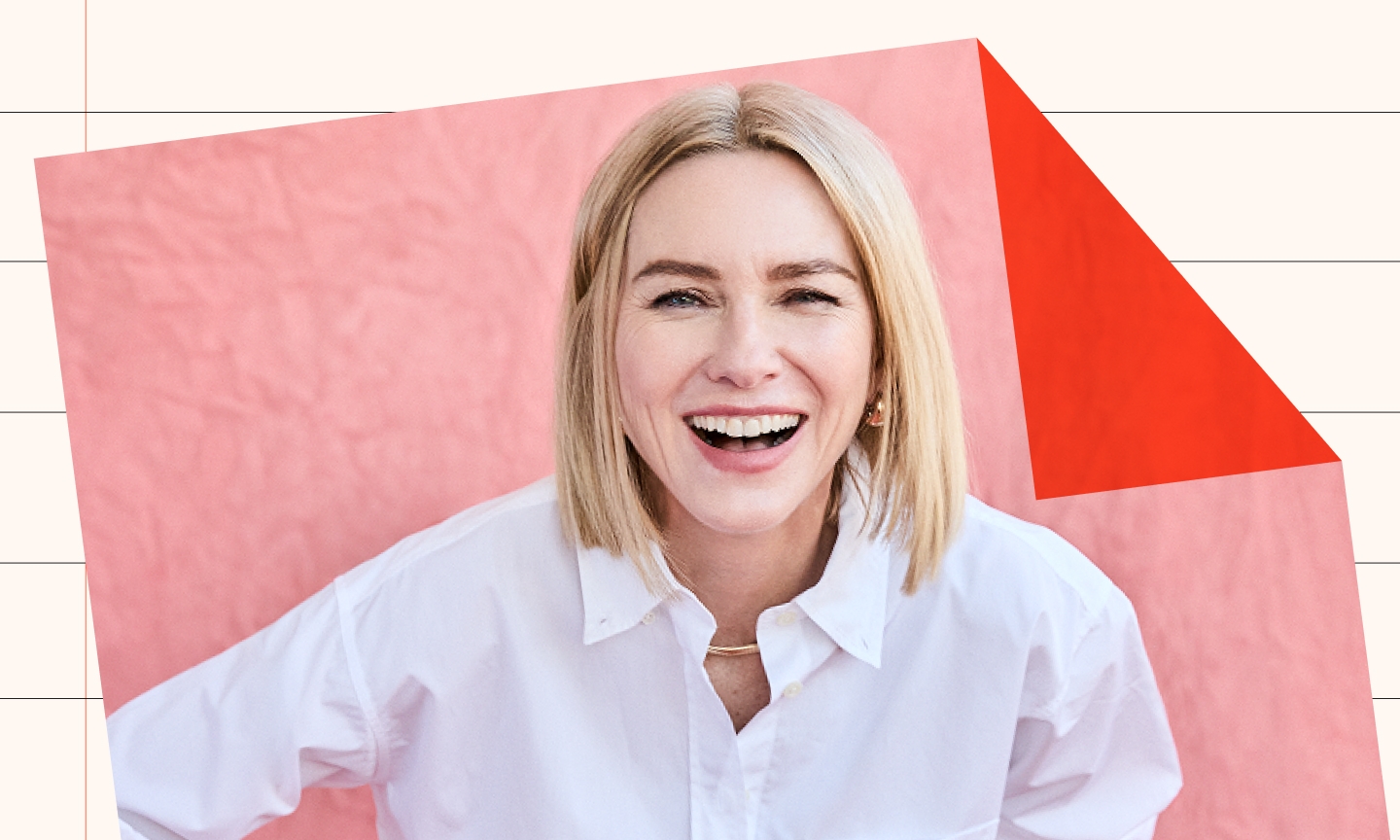
Some people slide into Naomi Watts’s DMs to talk about menopause. Others find someone who knows someone who can connect them. The questions range from “Am I losing my mind?” to “Can you send me your list of doctors?”
For years, she’s spoken publicly about menopause, and in 2025, she published Dare I Say It: Everything I Wish I’d Known About Menopause. Watts has become a resource for women trying to figure out what’s happening to their bodies.She calls it a “menopause club,” and unofficial membership comes with hard-won wisdom and the things we wish our doctors had told us.
One topic she says deserves more attention? Your eyes. Hormonal changes during perimenopause and menopause (in addition to age-related vision changes) can affect the glands in your eyes that keep them lubricated, contributing to dryness and even blurry vision. Through a partnership with Johnson & Johnson, Watts encourages women approaching perimenopause to prioritize comprehensive eye exams. “I’m a creative person, so visuals are so powerful to me,” she says. As are the opportunities for women to take stock of their perimenopause and menopause symptoms and talk about them.
“You giggle, you laugh at these moments, but you also want to find a way to take control of them,” Watts says. We spoke with her about those unexpected changes and how to find someone who takes them seriously.
The stuff no one warns you about
Even if you weren’t planning to have more children, learning that chapter has closed can bring up a lot. How do you make sense of that?
There’s grief that comes with that. As much as you are like, “Yeah, I can wear white pants now, no problem,” you feel changed and it’s not necessarily on your terms.
And the symptoms don’t necessarily wrap up once your periods do. What has surprised you?
Only a couple of years ago I had my shoulder go out, and then that one solved itself and then the other one happened. So the symptoms, just because you’ve gone through menopause, don’t necessarily stop. They continue to appear and can be a whole sneak attack.
The eyes are a slow thing that just kind of creeps up on you. I remember that first moment where I was in my 40s, early 40s maybe, where the bill came out and suddenly everyone put on their glasses and pulled out their flashlights and we’re trying to figure out how to pay it.
What actually helped
You’ve become something of a menopause whisperer. What happens when women reach out to you?
It has surprised me how everyone popped out of the woodwork, not necessarily people I know. I guess it did feel like, “Oh, this is a menopause club where people want to confess and share their stories.”
I listen. I want to ask them how they’re doing, what are the symptoms they’re going through. Some come at it with, “Oh my God, I feel like I’m losing my mind with despair.” And some are more like, “OK, how do I organize here? What’s your list of doctors? Tell me.” It’s usually a nuanced conversation, different every time.
I ask them where they live. If I don’t know someone in their state, then maybe a good, credible doctor in my state might be able to connect us to another one in their state.
Then we have a laugh about it. It’s never a quick conversation. It might be a couple of rounds of it.
What do you tell them about preparing for a doctor’s appointment?
Prepare the list of symptoms and go in with your medical history. Write down some questions so that you’re really using that time with your doctor well, and make sure they give you all of the options based on your medical history.
If they gatekeep and they’re not hearing your symptoms, then it might not be the right match.
What would you say to someone in the thick of it, wondering when she’ll feel like herself again?
Hang in there. You will feel like yourself again. It’s the perimenopause stage that is a little bit scary, where you’re up and down and the hormonal fluctuations are interfering with mood and sleep.
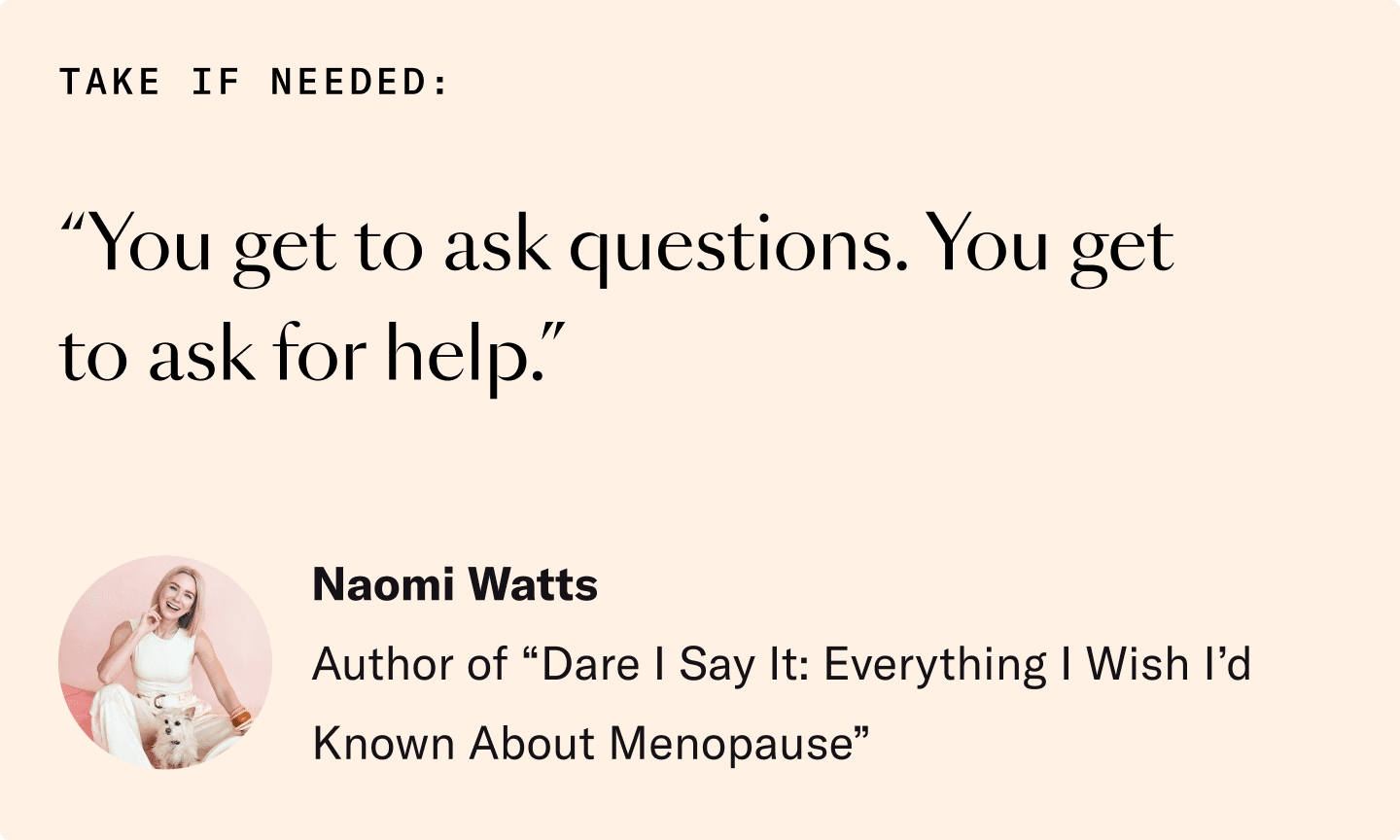
Even if it hasn’t happened to you yet, you can know it from the women around you who are ahead of you. […] You get to ask questions. You get to ask for help.
Owning Your Age
Talking about menopause also means acknowledging your age. How did you get comfortable doing that in Hollywood?
I got started late by Hollywood standards, and I was always afraid of telling my age. I remembered someone early on saying, “You should get someone to change your IMDb page and lie.” And I was like, “Can you do that?”
I actually entertained it for a minute and then I thought, “But why?” I have compassion for people who feel they must hide it because it’s a youth-driven society and world.
It took a while for me to get there and feel like I can own it. I think maybe getting past 50 is when you do that. You’re just like, “Oh, I’m sick of pretending that this is not a thing.”
I think there’s a new focus and belief in someone being of a certain age. We see it better represented and celebrated in film and TV and media and now on catwalks and fashion shows. And it needs to be.
What helped you become more confident asking for what you need, both from doctor appointments and in life?
Again, it’s experience and knowing yourself and knowing what your limitations are and having failed a million times and knowing how to recover.
It’s not failure to the point of undoing, like it was in the beginning. It’s just like, “Oh, OK, that happened. I tried. Well, maybe I’ll try this now.” That takes a certain confidence — to recognize what works for you and what doesn’t and to know how to reinvent or reorganize and avoid doing it again.
What do you think we miss when we focus so much on youth?
We are consumers, we are [part of the] work[force], and we bring to it a lot of importance through our experience and through our wisdom and empathy. That is not something that the youth can just suddenly arrive with.
Yes, the youth are filled with innovation and energy and stamina and all of those things, but there’s something to be said for experience.