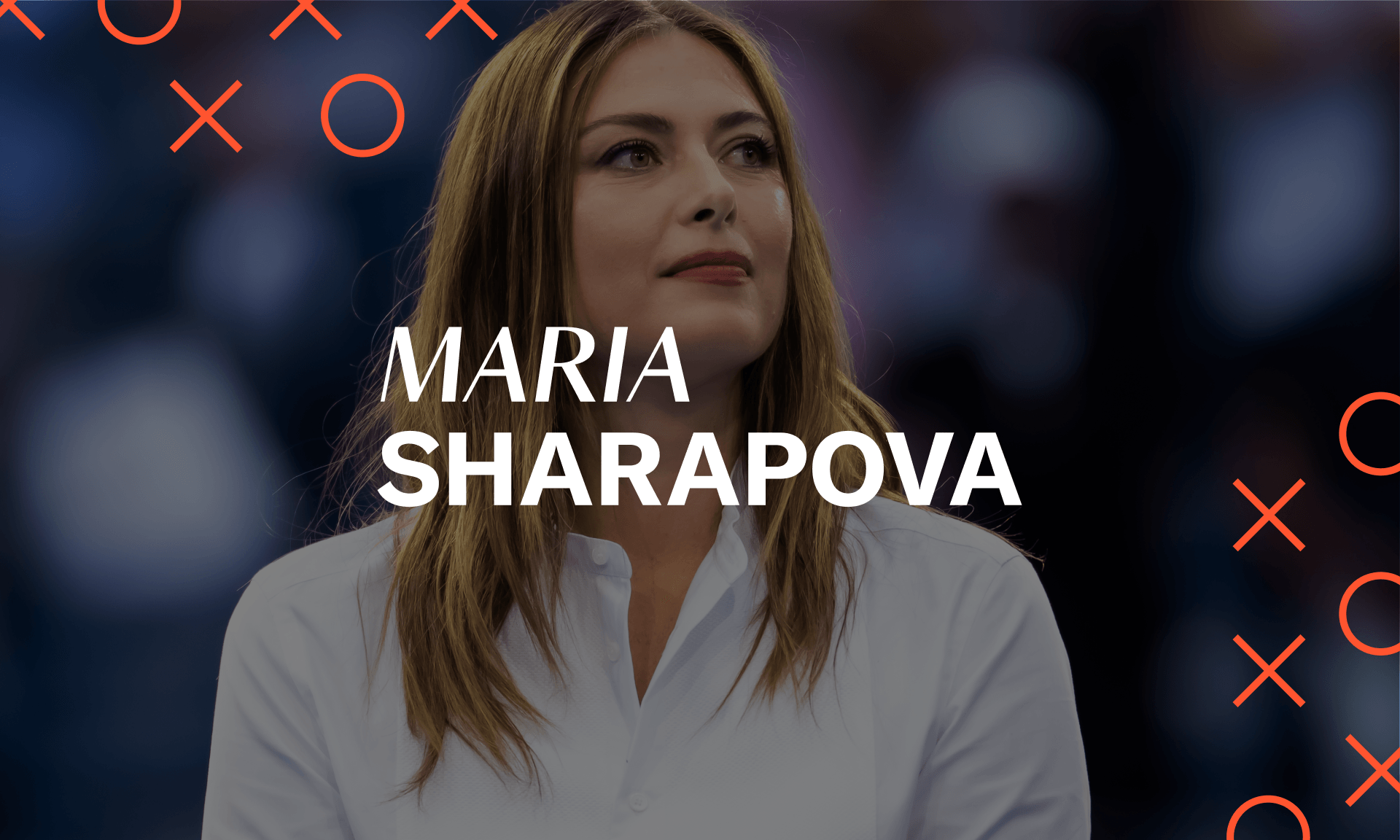
Maria Sharapova likes to paint inside the lines. Six years after Sharapova hit her last professional tennis ball and retired, the five-time Grand Slam champion now brings the same precision to her latest venture: podcasting. The host of the aptly named Pretty Tough may have traded the match for a mic — but not her work ethic. “I don't think everything should be soft and fluffy,” she says.
It’s a role that makes sense for someone whose own education didn’t stop after her tennis career ended. “It wasn't just about hitting a serve or a backhand,” Sharapova says. The sport taught her business and offered new opportunities in everything from design to investing. The challenge was getting people to see her as more than a tennis star.
“It took a while for people to appreciate the fact that I could stand up for both things; for being someone who holds a Grand Slam trophy, but who is able to go into a boardroom and have something thoughtful to say,” she says. “I don't think that a lot of women are given the permission to be all those things, even though they are a lot of the time.”
One of Pretty Tough’s next guests, Alexandra Eala, brings that full circle. The 21-year-old Filipina tennis star, who has called Sharapova a childhood idol, is the podcast’s youngest guest to date. “She is so incredibly mature, and it just reminded me how quickly you grow up in sport,” Sharapova says of Eala.
She would know. Sharapova won Wimbledon at 17; Eala has an entire nation behind her. Game recognizes game… and the pressure that comes with it: “I was like, ‘uh huh, uh huh… been there.’”
Sharapova nearly gives that relationship a name: mentor. Then she pauses, laughs, takes it back. She prefers “being a helping hand in times when you know sh*t's hard because it is.”
From career to criticism, we asked Sharapova what she’s learned — and what she’s still figuring out — in this new phase of her life.
Athletes basically have a PhD in taking care of their bodies. What’s one thing the rest of us should steal from them?
I always go back to consistency. I think one thing that I've noticed since retiring is there are so many trends about wellness and supplements and workout techniques, but you have to give things time in order to see how they affect you.
We're often pressured into somebody else's experience, and we kind of forget to experience it ourselves before having a real opinion, or giving up on something when it gets a little too hard, or when we don't see the results right away. So I always think of consistency. It was a really strong lesson for me.
You spent your career pushing through. What does your body tell you now that it didn’t then — and do you actually listen?
It’s funny because now my version of vacation is so different to what it was when I was playing. When I was playing, and I went on a holiday, which was very rare, like once a year, I obviously wouldn't see the tennis court. I would not see the gym. I wouldn't do a cold plunge.
Now I go on holiday, I actually have an hour to go to the gym. We were on holiday with a friend of mine like a month ago in Mexico; the Aman [Editor’s Note: Aman is a luxury hospitality company where Sharapova is a Global Wellness Ambassador] built this hot-and-cold situation that was incredible. So I sat in the cold plunge for three minutes while my friend looked at me like I was crazy.
You were incredibly disciplined as an athlete. What does discipline look like now?
I went so hard when I competed. You land after a 12-hour flight, and you're on a practice court getting used to the time difference, adjusting to the court, to the atmosphere, working on your racket tension. You're in preparation mode all the time, even on a day when you wake up and you're feeling ill, and you know your immunity is down. You still go through it.
I no longer push through like I did when I played, and I'm still trying to find what my kind of version of that is.
I'm 39, not 25, so what my body needed then is different than what it needs now.
What’s something you’re still working on that people might assume you already have figured out?
It's definitely tied to motherhood: Patience. Getting them out of the door, transitioning from one activity to another... all the things really require a calm, patient perspective.
You’ve spent years hearing other people’s opinions about you. Have you ever felt pressure to soften your edges?
I think what sport taught me is you grow into being comfortable, that [everyone has] opinions. I actually quite like the idea of getting feedback through opinions — whether it's constructive criticism or things you can work on.
That's the idea of having a coach next to you, whether it's a life coach, a mental coach, a sports coach, someone who can give you a clear picture of what they see from the outside. It's a little bit of a reality check.
I'm someone who likes to learn, so when there's an opinion, I always say to my friends or people I work with within the podcast, “Give me feedback.” [Then] I can take it somewhere. If I don't have anything, then I'm just on the same wheel.
I love working off of feedback, even from people I've never met.
What’s a money lesson you had to learn at a young age?
One thing that I'll say about money: Know what's going into your account and what's going out. If it takes a couple of hours every month to sit down with people who are overseeing your finances, and [even if] it feels like the last place you want to be, it is the best use of your time.
What’s the best thing you’ve ever spent money on?
Treating my family and my friends to an incredible vacation.
Tennis players have pushed for more of a say on everything from prize money to the schedule. What’s one issue in tennis you think deserves more attention right now?
I’ll start with scheduling, but it’s a chain [reaction]. It's never just one thing.
Buzzer Beaters
What’s one word others would use to describe you?: Goofy.
Something you’re secretly amazing at?: Flower arranging.
What are you watching right now?: Margo’s Got Money Troubles.
What’s always in your purse?: Antiseptic. It's called Magic Molecule. It's like an antiseptic spray.
If you weren’t an athlete, you’d be… An architect.